A Moving Blog

Occasional celluloid musings from BarryG

Showing posts with label HK. Show all posts

Saturday, 12 November 2011

Punished

A-

Looks like a mediocre TV series segment, whose lack of tension is announced by bland background music.

****************************************************************

Punished has a slim storyline that could have been compressed into a couple of episodes of a standard TV detective series. But Hong Kong does have a movie industry that needs to deliver Cantonese-language products to cinemas at home and abroad (and dubbed Mandarin versions to mainland cinemas and genuine DVD stores).

The 2010 product from the Milkyway production team (led by Johnny To) can only be damned with faint praise: it's a competent vengeance movie with the crime genre's regular themes of middle-aged male bonding, corporate loyalty, painful violence and unfilial spoilt children.

The first third of the stretched-out 90-minute action thriller piques an audience's interest with flashbacks from and to the choking death of the obnoxious ransomed daughter of a property developer (Anthong Wong as angst-ridden as ever). His palatial home houses a second wife who's a young business brain, a housekeeper who's a black-clad mystery character, and a right-hand man (Richie Ren) who's a divorcee with an objectionably dismissive schoolboy son.

Having already paid 50 million HK dollars for the girl, the developer pays his loyal henchman the same amount to exact revenge on the kidnappers. Observers might want to know who they were and why they killed the girl, even though her death held no dramatic import, but soon realises that they had none either. They are disposed of, brutally, one by one, after low-calibre fisticuffs, and the screenplay had to add an inconsequential sub-plot and schmaltzy surreal conclusion to fill its allotted time.

Director Law-Wing-cheong does nothing to flesh out the skimpy tale. The movie looks like a mediocre TV series segment, whose lack of character or tension is announced feebly by its bland background music.

Tuesday, 16 August 2011

Gallants

Nostalgia is a winning formula brightly brewed by Clement Cheng and Derek Kwok for Gallants. The award-winning 2010 kung fu comedy is a delightful showcase for various 1970s Hong Kong action stars and veteran actor-musician Teddy Robin (Kwan). The gnome-like and far from handsome comic character chews the scenery charmingly as a randy, bullying kung fu master awakened from a three-decade-long coma.


Many of the usual comic kung fu figures are gathered in a rural restaurant that the master's two loyal ageing weary-boned pupils (Chen Kuan-tai and Yeung Siu-lung) operate in his former martial arts academy. A bumbling estate agent wimp and wannabee fighter (Wong Yau-nam) arrives from the big city, meeting local gangsters, a bullied old schoolmate who's become a US-educated show-off fighter (rapper MC Jin), a pretty girl from Shanghai (JJ Jia) and an old lady doctor (Susan Shaw Yin-yin) with unrequited love for the mischievous master.

When the cliches are cobbled together, with a 30-year-old duck carcase and high-speed action choreography, the audience ends up with a predictable low-budget version of Kung Fu Hustle. Like that Stephen Chow masterpiece, this is a movie that shows its love for old-style Hong Kong movies, and respect for vintage actors who still make the right moves when a director zooms, pans and swivels around them with TLC. Robin's background music recalls the Spaghetti Western era, and the screen is infectious fun when he fills it with wild eyes and craggy features.

Andy Lau was one of the film's producers, and his faith in Kwok's concept was rewarded when the film won the 2010 Hong Kong Best Picture title and awards for Best Supporting Actor (Robin) and Supporting Actress (Shaw). Small is beautiful when it's so clearly heart-felt.

Tuesday, 2 August 2011

Wu xia

Four years after The Warlords (2007) earned him Golden Horse awards (best film and director), Peter Chan has new grounds for being seen as one of Hong Kong's grandest movie-makers. His Wu Xia is an intriguing martial-arts period (1917) piece blending the concepts of David Cronenberg's The History of Violence, US TV's CSI franchise, Tsui Hark's Detective Dee, Guy Richie's Sherlock Holmes and Kitano anti-heroes.


A seemingly humble paper miller (Donnie Ip Man Yen) becomes a rural community's unexpected hero when he tackles a pair of notorious bandits and is "lucky" enough to kill each of them by accident (in the first of three action scenes directed by Yen). The magistrate (ubiquitous Takeshi Kaneshiro) inspecting the case suspects that skilled martial artistry accounted for the luck, and is shown, through slow-motion replays and imaginary in-body fast tracks, proving his forensic conjectures.

Yen's humble character eventually admits that he's the son of the maniacal leader of an evil gangster sect. He'd left his father, finding peace with a young woman (enchanting Wei Lust, Caution Tang) whose husband vanished leaving her with one son. The couple's own son is sought out by the vicious grandfather, leading to the son's self-amputation of an arm and a final stand in which the scientific mind of the detective and the swordsmanship of the miller prevail.

Unlike recent Chan movies, this one doesn't flaunt a cast of thousands and epic scenes. Musical interludes do pop up like Greek chorus routines, sung/declaimed in dialect, and there are the expected showcases for Yen's martial choreography, but the film is mostly a character study and real drama. Much credit (and many awards, surely) must go to screenwriter Aubrey Lam (Chan's frequent associate).

The cinematography by Yiu-fai (Confession of Pain, 2046) Lai and Jake (Yang Yang, Monga) Pollock would also be noteworthy if it hadn't used film that looks like a suitable case for re-mastering. Too often, scenes were murky, their dullness contrasting badly with vivid sound effects and lively acting.

Multi-lingual Japanese-Taiwanese Kaneshiro yet again rules the acting roost, with a restrained Depp-style individuality. Yen performs the necessary acrobatics well (finely utilising a trio of veteran character/kungfu actors whose facial acting pushes bland-faced Yen out of an audience's focus), but his character's non-stop niceness is not credible given the past evils and despicable parentage shown on the screen.

Once again, Hollywood's Weinstein team quickly identified a possible winner and also bought the re-write rights for the US market. Understandably, they've abandoned the literal translation (Swordsman) and opted for a snappier title that has nothing to do with the story (Dragon). Although that sounds like counter-productive product marketing, the Weinsteins usually know their markets well. Maybe they'll add a suitable subheading, CSI China 1917, if Bruckheimer would let them. No way he will; he'd probably commandeer the concept himself.

Sunday, 8 May 2011

The legend is born

Donnie Yen's Ip Man had a sequel; a prequel was inevitable, once a suitable actor appeared to play the Hong Kong kung fu hero. Dennis To Yu-hang had roles (his first) in both Ip Man movies, and the lanky martial artist was signed up by a different production company for the title role in The Legend Is Born: Ip Man. He's not a charismatic actor, so veteran director Herman Yau was hired to deliver a product that didn't need star appeal.


Sammo Hung, a Hong Kong martial arts super-star and featured actor in both Ip Man films, plays Ip's first teacher (of the Wing Chun school), and a neat casting coup presents Ip Man's real first son, Ip Chun, also an Ip Man retread, as a comically cantankerous old teacher of new methods. Yau uses him well, for pace and to enliven the screen whenever he shares it with wooden To. There are two wistful love interests to add female allure, but the only other major character is Ip's adopted brother, an undercover Japanese agent sympathetically portrayed by Fan Siu-wong. The son of a Hong Kong martial arts actor, Fan was a supporting actor award nominee for the first Ip Man movie - Hong Kong in reality is a very small movie world.

The real-life Ip (or Yip) Man, born into a wealthy Foshan family in 1893, trained in the Wing Chun school of martial arts, moved to Hong Kong at 15, studied at St Stephen's College, gained a name for an anti-colonial stance, and returned to Foshan in 1917 to become a policeman and part-time martial arts teacher. An opium addict, he started his own kung fu school to raise funds when he moved back to Hong Kong after 1949, his best-known pupil being Bruce Lee. He died of cancer in 1972; there's a commemorative museum in Foshan.

Donnie Yen has refused to make any more Ip Man sequels, it's been reported. Other people will, and they'll be lucky if they hire a director as competent as Yau. He's the cinematographer who made Scud's gay Permanent Residence look better than it deserved to, and he gave the third Ip Man saga a good professional look.

Sunday, 20 February 2011

Stool pigeon

Good car chases and shoot-outs. Swishing machetes and gory wounds. Psychologically damaged characters on either side of the law. Hong Kong action movies have been there and done that many times, and writer-director Dante Lam needed a fresh plot element in 2010. So he constructed a screenplay about police informants as unsung anti-heroes in The Stool Pigeon.


In a previous multi-award-winner, The Beast Stalker, Lam had worked with the same screenplay writer Jack Ng and lead actors Nick Cheung and Nicholas Tse. The plot for their reunion is different enough to interest audiences and not be too surprising.

Cheung is a police inspector and experienced user of paid informants. The script includes many references to the two-sided exploitation, starting with a lengthy opening scene showing how circumstances obliged Cheung to expose an informant to almost certain death. This serves a key marketing purpose of providing a hyper-ham role for one of Hong Kong's hammiest supporting actors, Liu (Kill Zone) Kai-chi. Saved from death by luck, he is later found, a mad beggar, hiding himself from his wife and child, befriended secretly by the policeman.

Cheung's newest spy is a petty criminal newly released from prison, shaven-headed Nicholas Tse, a road-racer Cheung hopes will be recruited by a long-wanted goldshop-robber, providing a dubbed role for the mainland's commanding Lu (Aftershock) Yi . Cheung helps his man gain acceptance, offering him the chance to pay off his father's million-dollar debt, thereby freeing his sister from a life of prostitution.

When Tse joins the gang, he discovers that he'd met the chief's girlfriend before (in a brilliantly-staged flashback using overhead cameras to show two people fleeing cops and robbers on roads that meet, enabling the pair to escape). Taiwanese Kwei (Ocean Heaven) Lun-mai delivers another bravado offbeat performance, and her character's decision to swap loyalties is made credible by her and the script. She'd also worked on The Beast Stalker.

Far less credible is the secondary female interest, presumably attached to the plot in order to employ a leading mainland actress, Miao Pu. Her thankless role, portrayed very touchingly, is that of the policeman's lame and amnesiac wife, who'd attempted suicide and now works as a receptionist at a dance school where her unrecognised husband visits her. That's bad enough as an irrelevant plot device. It gets worse when her father and brother attack the inspector.

Lam's speedy direction and good editing allow audiences to accelerate past such roadblocks, and admire a lot of strong details in the settings and characterisations. As in all Hong Kong movies co-produced with mainland companies, we know that justice will prevail, good sinners will redeem themselves while their bad kin will die deaths of a hundred cuts, no leading sinners will speak Mandarin, and baddies never use the mainland as their base. Dante Lam's skills ensure that such an obligatory fairy-tale framework stands up well in this above-average action-thriller.

Tuesday, 25 January 2011

All about love

Any movie directed by Ann Hui is worth watching; those set in Hong Kong are cinematic albums of city memorabilia. In her latest (2010), All About Love, SoHo's restaurants and nearby Central-MidLevels escalator system and market lanes provide the richly colourful setting for an unusual mainstream movie experience: an examination of lesbian lives and loves.


Its blend of romantic comedy, socio-political commentary and pop psychology (written by Yee-shan Yang) only works some of the time while telling the tales of two schoolgirl friends who had an adult affair, split up, and meet again by chance when they've both become unintentionally pregnant.

Banking executive Anita (Vivian Chow) met young Mike (William Chan) through the Internet for a one-night fling, and the actress's dead-pan eyes help the audience to believe that her character hadn't realised he was a virginal quick-firing 19-year-old student who'd forgotten to put on his spare condom.

Her quick-tongued high-spirited ex-lover, Macy (Sandra Ng, of course), is a lawyer representing her office neighbour Robert (Eddie Cheung) in his divorce. After a few dinners and heart-to-hearts, she ends up teaching him how to give his wife orgasms, which leads to her accidental pregnancy. The two women attend a pre-natal clinic, and get re-acquainted in a cute up-and-down trip to their different flats beside the escalator on Hong Kong Island.

The "bi" women's characters, and nervousness about each other's commitments to each other and their pregnancies, are sketched charmingly, and the two men trapped in their predicament are well played and remarkably credible and likable comic fantasies. They're joined by a more intense married couple of lesbian friends who may adopt Macy's baby.

On the fringe of this sextet of very modern Hongkongers, a circle of dedicated feminist lesbian activists provide an occasional chorus of socio-political comments. Maybe they're intended to elaborate the women's difficulties, or add a wider perspective to the tale of middle-class angsts. But, when the political angle overwhelms the story, as with an emblematic street protest against her bank's harassment of Anita, the movie's credibility is diminished, and the ending is too pat to be true even for a rom-com fantasy.

Monday, 24 January 2011

Bruce Lee, my brother

One of modern Hong Kong's least forgivable failures is its lack of a museum, or a truly commemorative monument, to honour its most famous resident. The West Kowloon cultural complex probably won't have a museum or research centre to showcase any of the past glories of the Hong Kong film industry. Such bitter regrets were prompted by Bruce Lee, My Brother, the 2010 biopic co-produced by the kung fu star's younger brother, Robert Lee, and co-directed by Manfred Wong. Prolific actor-writer-producer Wong also wrote the screenplay, adapted (i.e. fictionalised) from the younger Lee's memoir. This was his fifth direction, the first since 1993's Da Lu (The Trail), and he shared the task with veteran Raymond Yip Wai-man.


For a little more than two hours, the film's finely photographed, costumed and decorated series of tableaux outline the early life in Hong Kong of Hollywood's first and foremost kung fu actor. It's a pretty movie that's rarely entrancing. At times too slow and reverential, the biopic feels akin to a historical slide show.

Much can be learnt about family members and traditions in the 30-strong household of Lee's hard-working father, a Cantonese opera star, from 1941 until Bruce was shipped off to the USA, his birthplace, to save him from Hong Kong police charges and gangster revenge. Key events and moments in Lee's childhood and teens are covered, in a valiant but stilted and far from revelatory effort to sketch the background of his personality and martial artistry. Bruce is presented rather than impersonated by a young actor with similar looks: singer-actor Aarif Lee (nee Rahman, his father having Malay-Arab-Chinese ancestry). After completing university in London in 2009, he returned to Hong Kong and co-starred in the award-winning Echoes of the Rainbow.

The end credits are worth watching for their juxta-positioning of historical family photos and the film's reconstructions. One far-fetched school story proves to be true: Bruce did win a cha-cha competition, choosing his young brother as his dance partner. In the movie, that's explained as the result of Bruce avoiding having to choose between a childhood tomboy who loved him and the girlfriend (Jennifer Tse, daughter of stars and sister of Nicholas) of his new best friend (well played by Zhang Yishan).

Both girls may be fictional characters, but brother Robert's voice-over notes that the male friend's drugs-related death in the 1960s affected Bruce deeply. In the movie, the friend's addiction is the result of his girlfriend's liking for Bruce, leading to an almost comic showdown with gangsters and the screenplay's recurrent evil limping character across four levels of multi-block scaffolding and boards.

Other homages to or quotations from classic kung fu movies include Western-style boxing and kung fu fighting matches with a Caucasian student (the supposed son of an English policeman has a North American accent). There are standard scenes of unpleasant Japanese and British administration of Hong Kong, conducted by the local villain (who ends up killed by the drug addict, as might be expected in such formulaic scenarios).

Many of the period details were interesting, particularly the captioned recreations of Hong Kong movies the young Bruce appeared in or might well have watched from the studios' rafters. However, too many artfully-lit close-ups of the Bruce-loving girls were tiring, while the banter of Bruce and his schoolfriends (one of whom was depicted as the stereotypically comic, fattish son of a household cook) and Bruce with his sisters also stretched credibility.

Tony Leung Ka-fai was effective as Lee Sr, and the first half-hour of the movie is his story. After that, he rarely appears (as in the reality of opera seasons, it can be assumed) and the film fails to illustrate Bruce's teenage relationship with him and his mother (whose family richness and English-speaking ability is not explained), played somewhat mysteriously by Christy Chung.

Born in San Francisco while his father was performing there, Bruce was sent back to the USA. His American wife and her family estate owns that part of his biography (until his death at 32), as an introductory statement indicates. The full Bruce Lee story waits to be told, and his family home and memorabilia still await long-deserved commemoration and display.

Monday, 20 December 2010

Exiled

Johnny To is a Hong Kong film auteur who ended up with more commercial success (a la John Woo) than arthouse appreciation (Wong Kar-wai). His production company's name, Milkyway, has become a short-hand way of describing an audience-pleasing distinctive blend of quirky humour, balletic gunfights, vivid colours, and a corps of actors relishing action-thriller roles as sentimental macho (some critics say homo-erotic) gangsters.


Exiled, a 2006 gangland saga set in pre-1999-Handover Macau, has been described as a "Greatest Hits of To" film. It amalgamates standard tricks of his movie-making trade, and those of such regular associates as Szeto Kam-yuen (screenplay), Cheng Siu-keung (cinematography) and David Richardson (editing).

Many of To's favourite actors go through their stylistic motions, well, and the movie's opening tingles with promise and sharp editing. A pair of middle-aged hitmen (grim Anthony Wong and smirking Lam Suet) arrive at a rundown Macau tenement (amid Mediterranean colours beloved by To), and tell a woman (Josie Ho) with a baby they'll wait in the street for her man. Another, younger, pair of triad members (Francis Ng and Roy Cheung) arrive in the street, and the four men acknowledge each other and regret what they must do; it's clear the second pair have appeared to defend the threatened man.

The first pair have been ordered (the audience soon learns) to kill Wo, an exiled Hong Kong gang member (mournful Nick Cheung), who'd failed in his attempt to kill a triad chief (snarling sneering Simon Yam). Wo drives up in a decrepit deep blue van, and so, accidentally, and not for the only mood-lightening moment in the movie, does an undercover police car's comic inspector.

The eventual shoot-out is a typical To work of cinematic art, full of gunshot sounds and furious camera movements, in which none of the five former colleagues dies. The plot then sets up suitably dramatic settings (shadows and curtains, quarry cliffs and pine forests) for other gunplay choreography, with the screenplay providing breathing places in which the gangsters can eat, chat, bond, consider options, and glare or stare at each other.

Like all To movies, this one is made for showing on a big screen to a responsive cinema audience, which expects to be swept through wild coincidences and unnaturally empty streets into long-running pitched battles. One gangster may get wounded, but it'll be clear who it will be: a movie from To is too much of a formulaic cinema experience. Maybe he could have been a Hong Kong Eastwood, and he may believe he's an oriental Sergio Leone making Noodle Westerns.

Exiled is occasionally mesmerising, through pace, lighting effects and set design. At times, when shadows and hues are especially good, one senses the artfulness of Wong Kar-wai's productions, and realises why To eagerly displays his movies in international film festivals and competitions. Exiled was invited to Venice in 2006, and it must be suspected that To and his Milky Way team yearn for more arthouse appreciation. He's won awards a few times in Sitges (for Exiled too) and many times in Hong Kong and Taiwan, but major international appreciation eludes him.

Friday, 17 December 2010

Vengeance

In 2008, French producers introduced Johnny To, one of Hong Kong's leading action movie directors, to ageing French singer-actor Johnny Hallyday. They'd suggested he could replace Alain Delon, who'd backed out of an English-language thriller they'd planned. Within six months, Vengeance was made, and it competed at Cannes the following year.


It didn't win any prize, and it's easy to sense how it could have done if it had been given a script with stronger characterisations and a subtler examination of the nature of vengeance. Hallyday's Frenchman arrives in Macau to identify his murdered Chinese son-in-law and two grandsons, and send his shot-up daughter back to Paris where her father owns a restaurant. It's on the Champs Elysee, he tells the trio of hit men he hires to exterminate the trio that massacred his family, and it'll be part of your reward.

He knows they're professional, because they eliminate their boss's girlfriend and her lover in Hallyday's hotel. They soon realise he's a retired hit man when they discuss guns. They bond, in simple English, and Hallyday and the three Hong Kong actors (ever-reliable Anthony Wong, Gordon Lam and Lam Suet) succeed via facial expressions and body language in making the new partnership credible. The trio's regular boss is played (to the maniacally grinning hilt) by another ever-present Hong Kong lead actor, Simon Yam, and it's inevitable that the other gang will also have been working for him, ensuring To can set up wild gun battles on waste ground.

There are many magical To-style directorial moments to savour: a street of umbrellas in the rain, a pitched battle fought with huge cubes of scrap metal, flickering red neon lights, sunset on a beach, a bright red dress in Macau's city centre, shadowy alleyways and staircases. The actors could have carried an even richer plot, but the script seems to run out of energy.

In Leconte's truly rich The Man on the Train, Hallyday's character was a tired old bank robber happy to swap lives with a dying poetry teacher. This time, Hallyday (looking very lined and much older than his then 65) is a man losing his memory, reliant on Polaroid snaps to remind himself what his dead family and hired South China gangsters look like. What is revenge, he asks his gang, and it's already obvious by then that the movie won't try to give us answers. At the end, Hallyday laughs: he has seen happiness, and one wonders if he remembers that he has a daughter recuperating in Paris. At the beginning, she was the one demanding revenge.

Friday, 10 December 2010

Detective Dee

One of modern Hong Kong cinema's first and foremost action-adventure directors has roared back into commercial favour with Detective Dee and the Mystery of the Phantom Flame. It could become a major franchise for Tsui Hark, who has directed close to 50 movies (since The Butterfly Murders in 1979), and produced many more for both the cinema and TV.


Detective Dee is a fictional character based on a real 7th-Century magistrate in the court of Tang Dynasty ruler Wu Zetian, China's first and only female emperor. Under the name of Judge Dee, he's the hero of a series of 17 novels written by Robert van Gulik, a Dutch scholar in Oriental languages and diplomat (serving as ambassador to Japan and Korea when he died in 1967).

Tsui's film credits a novel about Detective Dee by Lin Qianyu. The screenplay was written by Jialu Zhang, working with Taiwanese veteran Kuo-fu Chen; they'd also collaborated on the adaptation of The Message, a 20th-Century Sino-Japanese espionage thriller that gained high ratings the previous year (2009)

Andy Lau plays the outcast magistrate brought back to court to solve the deadly self-combustions of two courtiers helping to prepare the coronation of Empress Wu. Tsui's trademark style of quick cuts, overlapping dialogue and fast action ensures that Lau's usual brooding glare and over-acted facial reactions provide minimal distraction. By contrast, Carina Lau (back on screen after a four-year break) is credibly dead-panned and imposing as the Empress.

There's the usual cast of hundreds of extras, palatial settings and martial artistry (designed and directed inventively by Sammo Hung, with tributes to tree-hopping, pole-leaping, high-flying and other classic movie acrobatics) in this grandly old-fashioned historical romp. The key supporting roles of a female warrior (Bingbing Li, The Message) and an albino courtier (Chao Deng, award-winning lead in Assembly) are well played, and Tony Leung (the tall one) turns in a customary screen-stealing growling performance as the one-handed supervisor of construction for a giant Buddhist statue. That's the movie's major scenic attraction, reminiscent of massive big-screen stages from Indy Jones or Lara Croft sagas (and Tsui's own past spectacular epics).

Sunday, 28 November 2010

Dream home

Edmond Pang Ho-cheung has a good track record as one of Hong Kong's more inventive directors, and his latest movie earned new appreciation for its leading actress and main producer, Josie Ho. She's one of Stanley Ho's daughters, which makes the theme of Dream Home highly ironic: this is a satirical murder story bloodily highlighting the inflationary horror of Hong Kong's property market.


Media reports suggest that Ho forced Pang to make his scenario even gorier, in order to intensify her movie's marketability. What was produced was a slasher movie that deserves to become a classic in its genre.

Utilising an ever-changing time-frame, Pang builds a back history of hardship, family pressures, slum housing, governmental collusion with property developers, economic lawlessness and marital infidelity to account for the calculated bloody-mindedness of a single woman (Ho) with two jobs and an obsession about buying an apartment with a harbour view.

She'd finally raised sufficient deposit cash, by allowing her terminally ill father to die, at a time when the Hang Seng Index reached its 2007 peak; the apartment sellers jacked up its selling price beyond her funding level. In one evening visit to the apartment building, Ho's calmly amoral character kills 10 people and a pregnant woman in a successful effort to decrease the building's property values overnight.

The side stories for some of them are further condemnations of Hong Kong society at varying levels, and their means of death are imaginative black cinema. The shockingly credible SFX (produced by an experienced Thai team) include a disemboweled punk smoking, a fully broken neck, a lesbian prostitute with a bed strut in her mouth, and a severed penis. Murder weapons such as a screwdriver, hammer, golf club and vacuum-packaging are derived from the side stories, adding to an audience's fascination with a movie presenting Hong Kong cityscapes with beautifully arranged lighting effects and subtle music (Italian composer Gabriele Roberto, who'd worked for Pang on Exodus in 2007).

Several well-known Hong Kong actors play cameos, but the only real character is Ho's determined workaholic. In this movie, she wasn't afraid to show her age, fleshy chin and an independent spirit that should have given her property magnate father sleepless nights. Pang's script, opening review of scandalous property prices, and post-production statement (on the DVD) comprise a bloody assault on his home city's major driving force.

There's an unexpected irony for Pang in the manic rebound of property prices in 2010, making the per-foot prices of 2008 now seem like relative bargains. I suspect there's another irony lying behind the artful front credits, when the floor plan of a vast apartment includes Portuguese translations; it would be truly ironic justice if they're the plans of a Ho family palace.

Saturday, 31 July 2010

Love in a puff

Miriam Yeung and Shawn Yue were wise to accept the leading roles in the low-budget comedy Love in a Puff. It's a witty romcom that provides insightful glimpses into young Hongkongers' lives and loving.


Sadly, the movie was slapped with a Category III rating. As there's no violence, no hard porn or even softer nudity in creator-director Pang Ho-cheung's movie, the censors must have been glad that its dialogue (by co-writer Heiward Mak Hei-yan) was filled with salty Cantonese slang.

That was their excuse for not wanting under-18s to get access to a comedy about smokers. Even though Yeung's character (a Sephora-sponsored cosmetics saleswoman) is afflicted with asthma and shown promising to quit when she falls in love with fellow-smoker Yue ("in advertising"), she doesn't. Many of their friends - and a quartet of local cops - smoke, and their friendships seem to hinge on being members of multi-racial socially-mixed smoking cliques that gather in alleys and corners to enjoy their addiction. It would be cynical to suspect that Lucky Strike provided production funds as well as the essential props.

Within a seven-day (captioned) time frame, Yeung chases Yue, ends a five-year live-in relationship, goes to a love villa with Yue, and loses him. She finds him again during a budget-day cigarette-buying binge and they mutually agree to stop smoking. Happy ending? Anyone who left the cinema as soon as the main end credits flashed up will think so. Those who stayed a few minutes longer, thinking they were watching the traditional Hong Kong series of comical out-takes, got to see the final sting in this tale. It's a clever ending for a light but above-average romcom.

Yeung's character is identified as being older (by four years) than Yue's, but she looks almost a generation older and maturer, with a purplish wig that gives her character a soignee air that looks out of character. That makes her sudden desire for the wimpish and bespectacled Yue hard to fathom at first glance. Their courtship conversations, via SMSes as much as in person, reveal a prickly pair of self-defensive Hong Kong personalities.

The movie also reveals amusing aspects of modern Hong Kong, some predictable (karaoke and Facebook fraud), others not (sidewalk pirate lookouts, ashtray manufacture). The opening sequence is a neat short horror story (Pang being a master in the genre), and the inclusion of mockumentary interviews with the leading characters adds useful alienation and explanatory effects. The movie deserved a bigger audience, to remind Hong Kong that local cinema can supply above-average dialogue.

Sunday, 18 July 2010

Cinema Hong Kong


Cinema Hong Kong is worth noting as a three-part documentary series shown on US TV's Discovery Channel. Screened in 2003, it was written and directed by Ian Wright, whose only other IMDb credit is as a cameo actor in a low-budget US pizza-horror movie. The segment with the widest audience appeal in the US was issued separately with the ghastly title Chop:Socky.


The three areas covered, from the 60s and 70s primarily, are the kung fu and wu xia (sword-fighting/martial arts) genres and the female star "Beauties" of Shaw Brothers' golden years. Focusing as it does on Run Run Shaw and his studio's movies, and never ever mentioning Raymond Chow and Golden Harvest, the documentary series can be identified almost surely as a Shaw PR project to promote the company's re-mastering and re-issue of some of the 800 films deteriorating in its library.

Nevertheless, self-promotion for Shaw (whose key producer, his brother Runme, is also never mentioned) is relatively muted, and the commentary clearly suggests that Shaw (now over a century old) was an all-powerful and manipulative studio boss as well as a production and marketing genius. Many former contract stars (such as Jackie Chan and Jet Li), directors (including John Woo) and fight choreographers provide concise interview comments that amplify the well-scripted well-read never-mispronounced commentary. A personal favourite is the director who recalls one day of working on different sets for eight features he was making.

There are many fascinating details, from Hong Kong movie pioneering techniques (such as "in camera editing") to snippets of star news (Bruce Lee in a US TV interview) and gossip (the early deaths of various stars seeming like eerie precursors of the next generation of similar tragedies).

Wednesday, 14 July 2010

Night & fog

Ann Hui, a consistently good and personal director, studied an arch-typical Hong Kong "New Town", Tin Shui Wai, twice.


In The Way We Are [Tin Shui Wai Night and Day in Cantonese], she showed sweet-natured ordinary Hongkongers (a single mother and her teenage son) helping an elderly neighbour. The next year, in 2009, [Tin Shui Wai] Night and Fog, her production team focused on the true story of a family's murder-suicide in the distant New Territories residential outpost. The juxtaposition felt deliberate, as if Hui felt the need to absolve and bless Tin Shui Wai.

Dubbed "Hong Kong's City of Sadness" by the local media, the town had previously been covered sensationally by Laurence Lau's Beseiged City. Like other New Territories urbanisations (nearby Yuen Long and Tuen Mun gaining much media attention), Tin Shui Wai became associated with social problems, notably prostitution, gangs, suicide and unhappy cross-border marriages.

Hui's docudrama is gripping, even though its tragic outcome (stabbing to death of a family of four) is shown in the opening scenes. She highlights the greenery and spaciousness of the new town, and shows that it has a supportive social network (albeit comprising over-worked local councilors, immature social workers, an ill-equipped battered wives' shelter and a police force that cannot interfere in family disputes). Hui's reconstructions of the thoughts and actions of everyone involved, plus neighbours, family members locally and in the Mainland, also seem realistic but it appears that she could only scratch the surface. A fully fictionalised account might have found clearer reasons for a tragedy.

A middle-aged man brought his second bride and their young twin daughters from Sichuan into a government housing block in Tin Shui Wai. An unemployed renovation worker, surviving on social security and daily catches of fish, he's mentally disturbed, but only mildly at first. The young wife works as a waitress in a noodles cafe. Their initial passion in China is illustrated clearly, but it isn't made clear how they met (in Shenzhen?) or why their romance had died by the time of her arrival in Hong Kong.

Short-tempered to a dangerous extent, bitter, and feeling tricked, humiliated and unloved by the younger woman, the man lashes out and ejects her and the girls from the apartment. Reading between the movie's blurred lines, the woman and her Mainland family were probably conniving peasants eager to take advantage of a boastful Hong Kong man. His seduction of a sister-in-law is designed to minimise pity for his situation.

Simon Yam fits the role well. Many of Hong Kong's former romantic idols matured handsomely as actors, and Yam is one of the best examples of a star not afraid to sport a balding head, paunchy stomach, bad teeth and murderous leer. The young Mainland actress facing him (Jingchu Zhang) is less credible, her sweet-natured face not registering the depth of emotions that the audience needs to believe she provoked in her husband.


Wednesday, 23 June 2010

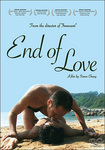
End of love

One of Hong Kong's better gay movies, screened at the city's annual film festival in 2009 with a III Rating, was shown at the Berlin festival but didn't gain a public release in its home city. End of Love seemed to deserve it, judging by the positive review in the Hollywood Reporter. There's none of the usual Asian angst about being gay, its review noted happily.


Its writer-director, Simon Chung, has delivered several technically competent gay movies since his first (1997) short. Stanley Beloved was a neatly crafted 20-minute study of a self-repressed teenage Hong Kong student trying to cope with gay feelings for a Caucasian schoolmate. A year later, First Love and Other Pains looked at a relationship between a forward gay Chinese student and his Caucasian teacher. In 2005, Innocent told tales about a young Chinese gay being out in Canada. Clearly not caring if he's typecast himself as a one-track film-maker, Chung now focuses on a young gay Hong Kong drug-addicted prostitute trying to get himself and his love life better organised.

When he's arrested on a drugs charge and sent to a Christian-run rehab centre, Ming (Chi-Kin Lee) meets and falls in brotherly love with a straight former addict, Keung (Gutherie Yip). Back on the outside, given a room by Keung in the flat he shares with a wayward girlfriend, problems arise as they have to do in such scenarios.

If this had been a tear-jerking Hong Kong gay fantasy from Scud, the two men from rehab would have shared a bed. Instead, more realistically, Ming never gets that close to Keung; instead, he's seduced by Keung's girlfriend. Throughout the movie, Ming is experiencing an on-off sexual and emotional relationship with a shopkeeper's son, Yan (Ben Yeung effectively conveying the man's conflicted character as closeted gay, interfering lover and caring son). That affair provides the gay genre's customary scenes of bedroom action, swimming on empty Hong Kong beaches, and wistful gazing.

Chung and his team seemed to have conducted valid field research into drug ingestion, male prostitution and Hong Kong's party-goers' behaviour. The detox camp's Christian leader and older inmates are especially well cast, and the Hong Kong location work is never incredible. But, as the dvd's set of stagy interviews reveal, everybody concerned knew they'd produced a sad story.

What happens next to Ming? Apparently, the movie-maker won't be telling us soon. In his dvd interview, he says his next project concentrates on a Westerner lost in a Chinese town. It's a safe bet that the lost man will be gay.


Sunday, 11 April 2010

Amphetamine

Once upon a time there was a Mainland-born Hong Kong-raised Chinese-Australian who called himself Scud. On his return to Hong Kong, as a bought-out IT company founder with lots of cash, he decided to make a movie trilogy, as any egocentric with sufficient funds might think of doing.


Scud made a docu-fable about Hong Kong's almost invisible baseball team. He called it City Without Baseball, which Hong Kong is, and got many of the team's members to frolic and assume revelatory positions in the nude. Maybe they asked him to make a pretty film about their frolicking. Whatever, it was technically highly proficient, surely because writer-producer and self-proclaimed director Scud had the nous to get an experienced film-maker, Lawrence Lau, to enact his directorial ideas. Lots of smooth Chinese skin, discreet strokes, skinny dipping, lustful stares, side glances, intense embraces and conversations fraught with angst.

Scud's second script seemed much more personal, featuring an affluent bilingual gay returnee from Australia who falls in love with a neurotic hunk of Hong Kong handsomeness who's a straight with subconscious gay leanings. The frustrated central character is an IT whiz who has had some sort of affair with an Arab Israeli, has a gorgeous apartment with a rooftop gym and, what a coincidence, has made a film about Hong Kong baseball. As far as soft-porn gay movies go, Permanent Residence went quite far with its in-your-face nude scenes, admirable homosexual characters and first-class technical qualities.

Although the film's plot was overly complicated, melodramatic and over-romanticised, it was attractively OTT. Less acceptably, its ending was a morbid anti-climax in which the object of affection chose to solve his personality issues by riding his motorbike off the end of a pier in Surfers Paradise.

Scud clearly identified with the plot, as he's reprised it for his third movie, Amphetamine. This time, there's a returnee from Oz (Daniel, played by somewhat wooden Tom Price) who's a finance industry whiz kid constantly asserting that everything in life is a piece of cake. He meets a straightish drug-habituated swimming instructor called Kafka (yep, we are told a gweilo named him that) who's been raped by a trio of gangsters in a tunnel. Love and lust blossom for Daniel, but Kafka plays hard to get.

Of course, audiences aren't allowed to see how hard he (or anyone else in the movie) actually played, because Scud wanted to be sure that his soft-porn movie could be released with a Category III rating. The lead actors play soft, though Daniel is noticeably more reticent about full-frontal nudity than Kafka until their underwater scene at the end of the movie.

Fans of Scud will not be surprised that Kafka also notes that he'd appeared as a model in the photo book of a film that had been called something like Permanent Residence, but hadn't been in it. In reality, Byron Pang is a competent screen actor, small and almost perfectly formed. His character's three changes of hair-style display varying images of Hong Kong cuteness and may be designed to depict Kafka's progression from adult-looking facial-haired cynicism to short-cut juvenile dreaming.

Has Scud himself progessed? Yes, and no. The irrelevant overseas location work (Bangkok, the Dead Sea and Queensland) added nothing to Permanent Residence; this time the only non-Hong Kong setting is a mainland police station. Otherwise, there are many deja vu plot details, another party scene in which Scud can flaunt his lead character's wealth of possessions and loving colleagues, and, unforgivably, another morbid ending. Symbolism runs rampant again, most risibly in the bird's nest Kafka constructs on high, on a high.

Hong Kong viewers may be perturbed by one guest appearance. Anyone who's known of Paul Fonoroff as a knowledgeable Mandarin-speaking veteran American movie reviewer will cringe at his appearance as a rich swimming-pool customer seeking satisfaction from Kafka and grinning gleefully at being allowed to pay a fortune for very little.

Scud's playfulness (some might say, immaturity) is paraded in the opening titles. Who'd have thought of noticing that Amphetamine (our heroes' drug of choice) includes the words Am, He and Mine?

Tuesday, 6 April 2010

Echoes of the rainbow

Good directors never let us know how manipulative they've been. Less good directors make it glaringly obvious that their scripts, casting, camera angles, music, editing, and all other tricks of the movie trade were designed to draw tears and cheers from audiences. Their movies are the cinematic equivalent of being force-fed an overdose of sugar.


When such a movie wins awards, I worry about the judges' capability to be objective observers of movie-makers. Echoes of the Rainbow, a 2009 Hong Kong movie, won the, take a breath ... Crystal Bear for Best Film in the Children's Jury "Generation Kplus" Category at the 2020 Berlin Film Festival. A cynic might suspect that it had little competition, or that the rest of the global movie industry didn't send any crates of sugar to Berlin, or that the Jury was indeed composed of children -- who merrily identified with the impertinent, inquisitive and thieving character of the younger son.

He lives in an urban community's back street, supposedly in Kowloon's Sham Shui Po but filmed on location in Hong Kong's only suitable surviving 1960s-style block, the Island's Wing Lee Street. It's a row of scruffy three-storey shop-houses that was scheduled to be redeveloped by Hong Kong's official Urban Renewal Authority.

Screenwriter and director Alex Law Kai-yui reportedly wanted to create a tribute to his older brother and hard-working parents. It is unimportant whether there was a grouchy soft-centred father who ran a shoe-making shop in the 1960s and if Laws's brother was a handsome musically-gifted prize student and champion athlete at the prestigious Diocesan Boys School.

Was his mother actually a broom-wielding soft-centred lady who wore neat make-up and cotton trouser suits? Did the brother develop a loving friendship with a super-rich girl who lived in a hillside mansion? Is the whole movie a fantasy?

Naturally. Only a movie family could experience so many attractive disasters and cliched situations (class differences, colonial-era corruption, typhoon, honourable Peking doctors, terminal leukemia, etc) in a collage of hackneyed movie settings (rain, blood-stained snow, stone corridors, running tracks, aquaria, frosted glass etc). Only a movie mother could name her new shoes Hard Times and Good Times, because one always follows the other, doesn't it? Aaah, you may sigh, but the plot gets stuffed even more a la pate de movie gras.

The quartet of lead actors do wonders with stilted dialogue and 1960s-style affectations. Simon Yam and Sandra Ng are admirable parental role models with hearts of gold, and each of them restrains their normal scenery-chewing personas. The first-timer child actor, Buzz Chung, plays the irritating younger brother well, with charm and fortissimo screams. And the new pop starlet making his screen debut as the older brother is handsomely pensive. Aarif Lee also sings, and co-wrote, the closing song. It's as OTT as the very non-1960s very short shorts which are draped around the tops of Lee's thighs whenever the script makes it decently possible.

Ironies marked this film's unexpected success in Berlin. Although the movie was more than enough of a heritage project in itself for the doomed Wing Lee Street, the Hong Kong Government performed its quickest-ever U-turn and forestalled any public pressure by declaring the lane a protected site of historical interest.

Consequently, the Urban Redevelopment folks must have been very displeased with colleagues in the Hong Kong Government Film Development Fund, which financed the film that frustrated their plans.

Third, several Hong Kong film directors provided guest appearances and may well feel twinges of professional envy that Law's sugary concoction has earned such rewards. Ann Hui shines as usual in her cameo, fleshing out the role of the school teacher scolding the mischievous boy.

Will the movie triumph at the next Hong Kong Film Awards? For the actors, probably. For Alex Law, it shouldn't. His basic plot was filmed, more sincerely and credibly, three decades ago in Allen Fong's first feature, Father & Son. That was part of the Hong Kong New Wave. It waved goodbye long ago. In the 21st Century, the local Film Fund should be financing innovativeness, not movie mothballs.

Monday, 22 March 2010

All's well, ends well

All's Well, Ends Well is an archetypal Hong Kong movie that inevitably prompts wordplays about archness, archives and stereotypes. It's a classic Chinese New Year movie, designed solely to appeal to local families seeking holiday happiness through shared laughter while watching local movie stars having silly fun together.

Bustling along with deliberately ham acting, slapstick, Cantonese wordplay, and references to contemporary Hong Kong and Hollywood icons, it's an evergreen example of the traditional Hong Kong movie version of the English variety theatre's Christmas tradition, the pantomime. Produced by Raymond Wong, it has been followed by his four sequels (including those for the Chinese New Years of 2009 and 2010). In several ways, it can also be seen as the Hong Kong equivalent of the UK's Carry On comic series, without the ogling crudity.

The 1992 movie's lead actors became even starrier stars during the 90s. Then-handsome young romantic actor Stephen Chow first flaunted his manic comic nonsense in it, and exuberant Maggie Cheung was his ideal sparring partner as a movie buff madly lost in her make-believe world of Ghost and Pretty Woman. Not yet a pop superstar, the late Leslie Cheung camped it up wildly as gay florist entangled with a very butch Teresa Mo. Beating them all at the comic game, Sandra Ng showed the screen-stealing talent showcased so brilliantly later in her Golden Queen triumphs. She returned, less memorably, to the local screen for the 2010 version.

The productivity of its acting talents two decades was prodigious, and clear evidence of the hyper-activity of the Hong Kong movie industry, then the world's third-largest, surpassed globally only by the States and India. In this quickie movie production, there are more than enough funny visual jokes, and clear enough subtitles, to delight non-Cantonese movie-goers.

Tuesday, 16 February 2010

To live/die in Mongkok

Few memories remain of To Live and Die in Mongkok. Sadly, that's often the problem with Hong Kong movies. At the time of watching them, one admires the technical excellence of the production. Every aspect, except a few crucial ones, will be more than competent. Rarely are there reasons to pooh-pooh the editing, cinematography, lighting, costumes, make-up, music, or even the acting (unless market considerations required that lead roles were assigned to talent-challenged TVB contract artists, that season's over-hyped pop vocalists, or miscast Taiwanese and mainland starlets). Too soon after, the shallowness and/or incredibility of the plotline and script provide the overwhelming recollections.

The writer-director of this Hong Kong thriller was Wong Jing, who gave himself a brief cameo role in his tale of a triad gang's internal politics and warfare. Nick Cheung starred as the anti-heroic central figure with a huge psychological problem (a frequent problem for triad characters). He's a schizoid. He's released from prison after serving a long sentence for mass, hit-man-ly slaughter in Mongkok, usually accompanied by his Imaginary Friend, who is himself when he was a young killer. Naturally, nobody else can see the IF, but he's the one who goes ballistic when the ex-con seems to do so. So that means our anti-hero can, conveniently, still be seen as a nice guy.

His younger self had been captured because a trainee policeman had shot him in the back, and the policeman is now a detective stationed in the same district. No surprise there, or in him also having personality flaws. The ex-con's childhood pal, who's suffering from a wilder variety of evil complexes, is nastier than anyone else in the manor, even the university-educated rival attempting to grab the triad leadership. The gang's old-timers want to keep their power, but why any of them would back their dead leader's maladjusted son's claim would be puzzling to anyone who hasn't heard of North Korea.

Meanwhile, in order to introduce female interest to the plotline, there's a heart-of-gold prostitute (the only type allowed to be seen in Hong Kong movies) from the mainland, with a retarded young sister who's just been abducted. The anti-hero must save them and their nice middle-aged pimp. But can he save himself from his belief that Mongkok is a cage from which he can never escape? The script shows us the anti-hero seeing that image quite a few times, to be sure that we get the melodramatic point.

There's a bunch of potentially interesting secondary characters, especially the Imaginary Friend who cannot believe what's happened to his old Mongkok haunts, but the movie depends crucially on the confused character of the anti-hero. He was an ambitious dramatic device, but lacks a script that would allow a viewer to sense why a nerdish middle-aged ex-con would be a revered icon in modern Mongkok. Nick Cheung stares distractedly, mutters politely and is a total gentleman in a prostitute's bedroom. He clearly could never survive in Mongkok, and why should we care?

  © Free Blogger Templates 'Photoblog II' by Ourblogtemplates.com 2008

Back to TOP